Three disciplines claim the word contemplation, and each one shapes its meaning into something the others would barely recognize.
The English dictionary says it is the act of looking at or considering something in a thoughtful way. A noun. Synonym: reflection, meditation. The contemplation definition fits in a single sentence and tells you nothing about what happens to a person who actually does it. The dictionary treats the meaning of contemplation the way a property listing treats a house: square footage, number of rooms, year built. Accurate. Uninhabited.
The Christian contemplative tradition says it is a form of prayer. Receptive, seeking awareness of God through stillness and worship. Thomas Merton wrote that contemplation is the highest expression of the intellectual and spiritual life. Centering prayer, contemplative practices, chant: centuries of concentration of the mind toward what cannot be named. For the religious seeker, to contemplate is to seek the focusing of soul upon God.
And then there is Prochaska’s stages-of-change model, where contemplation refers to something else entirely. In behavioral psychology, the contemplation stage is when a person identifies a problem and begins thinking about changing it. Not yet acting. Not yet committed. Sitting with the recognition that something needs to shift. This usage has nothing to do with spirituality. It describes a stage of readiness, a threshold between knowing and action.
I sit with whatever is present five times a day and let it remain without reaching for a conclusion. Not as prayer. Not as a stage of behavioral change. Not as an exercise I can define and move on from. Some days the contemplation is rich, textured, full of connections I did not expect. Some days it is flat, circular, a mind talking to itself about talking to itself. I have documented over a hundred and forty entries across months of sustained attention, and what I can express from inside this experience is that contemplation is none of the things the definitions say it is. It is all of them and something else, something the word cannot hold from outside, because the thing it names only reveals itself from within.
What Contemplation Means When You Stop Defining It
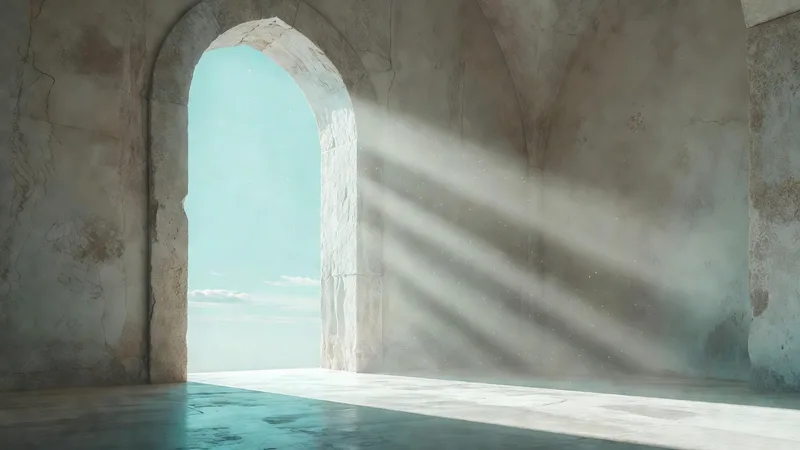
The word comes from the Latin contemplari, to observe. The root templum originally referred to a space marked out for looking, a section of sky the Roman augur would watch for signs. The etymology tells you more than any definition: before contemplation meant deep thought, it meant consecrated seeing. A designated space in which to pay attention. Not thinking harder. Setting aside a space in which to perceive what ordinary attention misses.
This distinction matters because most people confuse contemplation with analysis. In my opinion, the confusion runs deeper than the word itself. People assume to contemplate something means to think about it more carefully, to weigh options, to reason through a problem with extra concentration. That is deliberation. The contemplative mode is closer to the opposite. It is remaining with something without trying to solve it. Holding still long enough for the thing you are watching to show its own shape, rather than forcing your judgment upon it.
I learned this not from a theology textbook or a psychology manual but from contemplation itself. Sitting five times each day with whatever arrived, I discovered that the useful insights came not when I pushed harder but when I stopped pushing entirely. When I held the question without demanding an answer, the question changed. Not metaphorically. The shape of it shifted. A question I had been circling for days would suddenly reveal a facet I could not have found through analysis because the facet only existed in the space the analysis refused to leave empty.
Contemplative prayer and spiritual meditation both refer to a similar experience. The mystics, from Meister Eckhart to the anonymous author of The Cloud of Unknowing, all arrived at the same place: what they sought did not arrive through effort. It arrived through waiting. Creating the conditions in which something can arrive, rather than chasing after it. The contemplative life, whether rooted in religion or in secular stillness, follows the same architecture. Clear a space. Stop filling it. See what arrives.
The Three Days Nobody Writes About
Most writing about contemplation describes it as an activity: meditation with open eyes, journaling, a few minutes of mindful attention. For example, a therapist might recommend ten minutes of quiet sitting each morning. A guide might suggest a systematic daily period of silence. These are valuable entry points. What none of these descriptions capture is what happens when contemplation becomes sustained, when it stops being something you do for ten minutes and becomes the structure across your days.
In my experience, the transformation happens somewhere around the third consecutive day.
Day one feels productive. The novelty of deliberate attention reveals things you have been walking past. Patterns surface. Connections spark. You feel the value immediately, the way the first hour of a fast feels clarifying. You are contemplating, and you know it.
Day two is where most people stop. The initial insights have been noted. The fresh observations have become familiar. The mind, having exhausted the novel, begins recycling. You find yourself writing the same thought in different words. The whole thing feels like it has stopped working, and the instinct to act, to switch to a task that produces visible results, becomes almost physical. This is the stage Prochaska would recognize. Nothing is arriving. Nothing is resolving. You sit in the middle of your own attention and it has nothing new to report.
Day three is what nobody writes about because nobody stays for it.
The machinery that generates novel thoughts has burned through its fuel. The social performance, the internal narration that imagines an audience, has exhausted itself. What remains is attention without purpose, without product, without the sense that anything is building toward anywhere. And in that purposelessness, the acoustic floor drops. The noise you did not know was noise, because it was always present, becomes audible by its absence. The hum of your own thinking apparatus, which you had mistaken for the thing you were thinking about, goes quiet. What you find on day three is not what you were looking at. It is what was looking.
This is what no dictionary captures. It is not deep thought. It is what remains when deep thought has finished. The word contemplate suggests active looking, the gaze directed outward. The experience reveals something closer to being seen. You set aside the consecrated space, you hold still, and the space begins to see you. The subject and object trade places.
What Contemplation Reveals When You Stay
To reflect is to look back. It takes an experience that has already happened and examines it, seeking understanding after the fact. Contemplation does not look back. It looks at what is present, right now, without the buffer of elapsed time. One is the mirror. The other is the window that opens when you stop reflecting and start attending.
What I have found through sustained contemplation is that the distinction has practical consequences. The mirror tells you what you think about what happened. The window tells you what is happening in you right now, underneath the thinking. And what is happening right now is almost never what you expect, because the thinking was covering it the way a city covers its own watershed: effectively, invisibly, until the day the water table expresses itself through the foundation.
The impulse toward contemplation spans continents, from Buddhist meditation to Sufi muraqaba to the Jewish practice of hitbonenut, and all converge here. Different vocabulary, different context, but the phenomenology is consistent: sustained contemplation reveals what ordinary consciousness was designed to obscure. Not hidden truths. Not secrets. Something simpler and more unsettling: you are not the one doing the looking. The observation continues until the observer dissolves.
Every contemplative path eventually arrives at this threshold. The mystics called it infused contemplation, the moment when the seeker stops seeking and is found. The Buddhist path calls it vipassana, insight into awareness itself. For Prochaska, the stage ends when action begins. For those who stay past day two, the experience only deepens. Action stops and something else takes over. The experience begins to transform the one having it.
I do not know what to call the thing that takes over. I do not know whether it deserves the word divine or whether it is simply what attention does when you stop directing it. What I know from inside contemplation is that this sustained seeing, held long enough, becomes its own source. One sentence says it is deep and continuous thought. The experience says it is what happens when you exhaust the thought and stay anyway. The meaning is the thing you find when you stop searching for it and let the quiet hold the question without flinching.
Three claimants hold the word. Between them is a territory where the lived experience dwells and nobody kneels. I have been kneeling there for months, and what I can report is this: you do not enter contemplation the way you decide to run or read or pray. You clear the space, and contemplation arrives the way weather arrives, on its own schedule, carrying what it carries, indifferent to whether you were ready for it.
The space you cleared is the templum. What arrives in it is what the word has been pointing toward since the augur first looked up and waited for a sign that was already on its way.